Styles3 min read
Tattoo styles explained: fine line, realism, blackwork, lettering and more
By LUX INK Tattoo StudioPublished
"I want something small and elegant." "I want a realistic portrait." "I want lettering, but not boring." Each of these is a different tattoo style, with its own technique, its own look and its own way of ageing on the skin.
Knowing the basic styles helps you explain your idea to the artist and choose a design that will still look great in twenty years. Here are the styles our clients ask about most often, with examples from our portfolio.
Fine line
Thin, precise lines, minimal shading, lots of air. Fine line is perfect for florals, small symbols, delicate botanical pieces and minimalist designs.
Good to know: very thin lines can soften slightly over the years, so size matters. A design that is too small and too detailed may lose clarity. A good artist will suggest the right scale for the placement.
Best for: wrists, forearms, collarbones, ribs, behind the ear. Ribs and collarbones are among the more sensitive spots; see our tattoo pain guide.
Black and grey realism
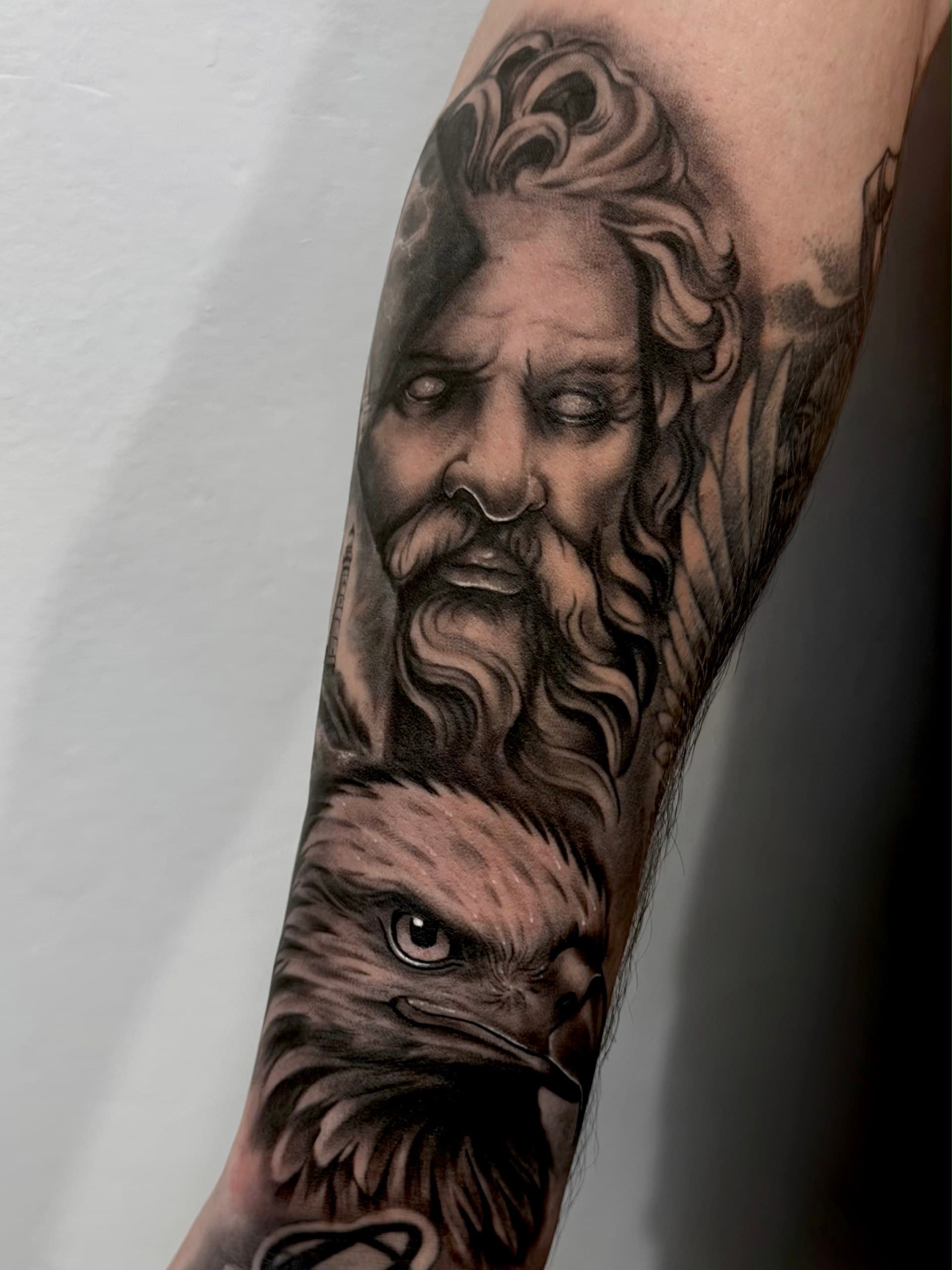
Realism recreates a photo-like image with smooth gradients of black and grey: portraits, sculptures, animals, mythology. It needs serious technical skill: shading, contrast and an understanding of light.
Good to know: realism needs space. A realistic portrait the size of a coin cannot hold detail, so plan for a forearm, a shoulder, a calf or a sleeve.
Best for: forearms, shoulders, calves, thighs, sleeves.
Blackwork
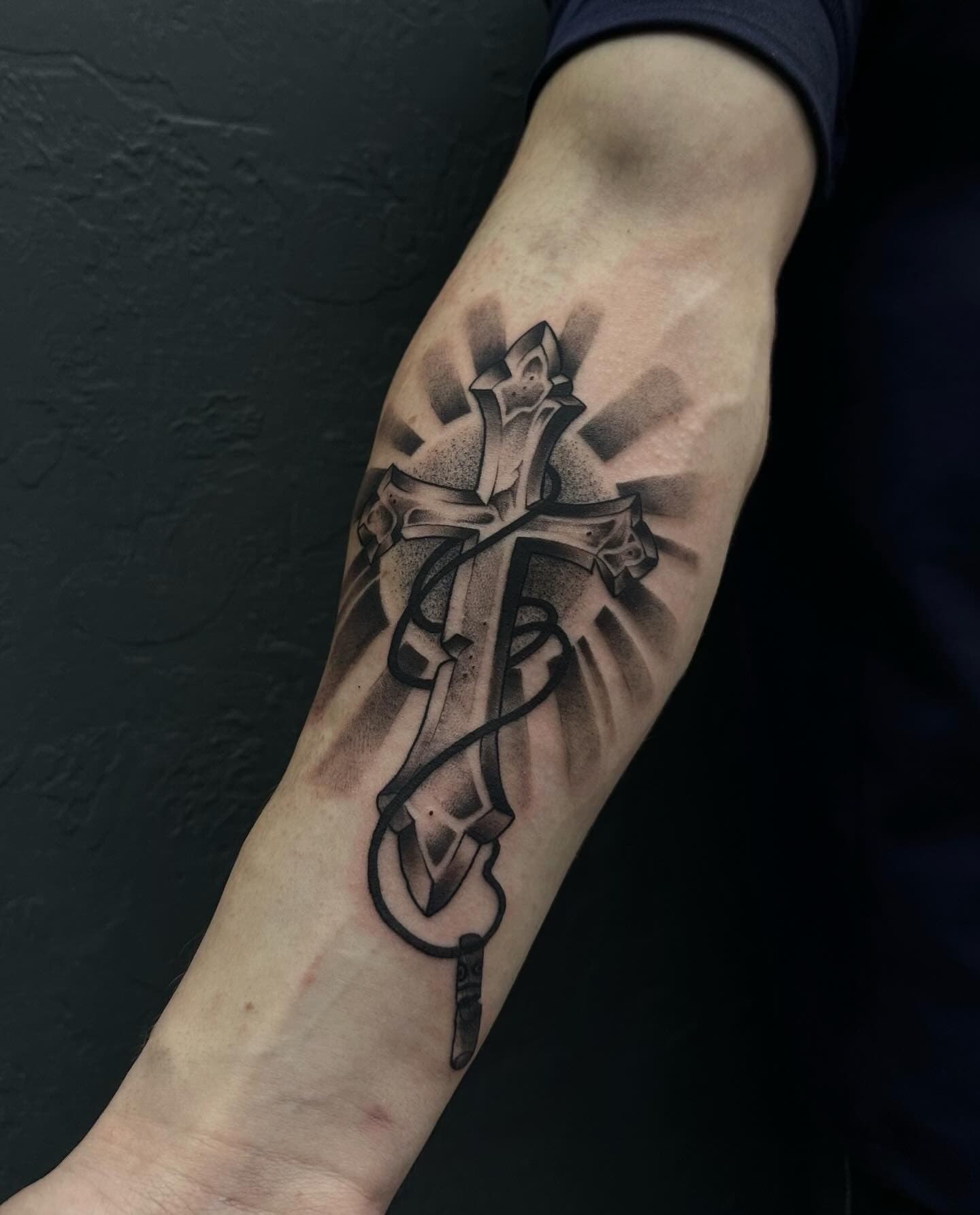
Bold, saturated black: solid areas, strong graphic shapes, geometry, dark illustration. Blackwork tattoos are striking from a distance and age very well because of their contrast.
Good to know: solid black areas take longer to heal and need careful aftercare; read our aftercare guide.
Dotwork
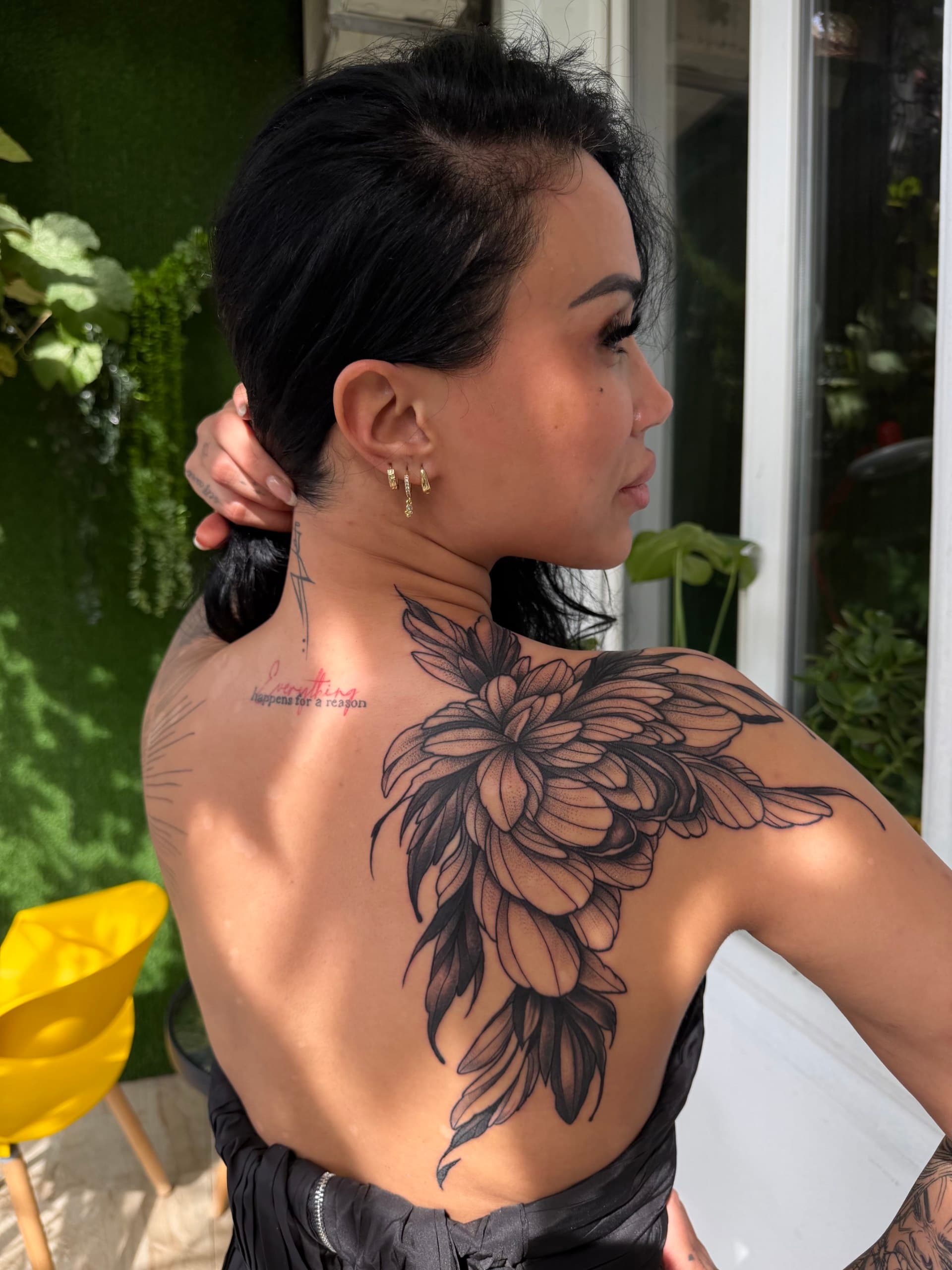
The image is built from thousands of dots instead of smooth shading. Dotwork gives a soft, textured gradient and looks beautiful in florals, mandalas and ornamental designs.
Best for: shoulders, back, thighs: places with room for texture.
Lettering and calligraphy
Words, names, dates, quotes. Lettering ranges from neat minimal type to expressive calligraphy with long flourishes that follow the shape of the body.
Good to know: the font is half the design. A good lettering piece is drawn by hand for your words and your placement, not typed in a standard font. And always double-check spelling, especially in a foreign language.
Ornamental
Patterns, filigree, symmetric and decorative elements, often inspired by jewellery, architecture or traditional motifs. Ornamental work flows with the anatomy and is often combined with other styles.
Black and red
A mostly black design with red accents: a flame, a drop, an eye, a single flower. The red becomes a focal point and makes the piece instantly recognisable. It works across styles, from illustrative to ornamental.
Illustrative and neo-traditional
Clear outlines, stylised shapes and a strong "drawn" character: animals, objects, symbols with a story. It sits somewhere between classic tattooing and modern illustration.
How to choose your style
- Start with the idea, not the style. What should the tattoo mean or show? The style follows from that.
- Think about size and placement. Some styles need space; others shine small.
- Look at healed work, not only fresh photos. Ask the artist to show tattoos that are a year or more old.
- Choose an artist who works in that style. A portfolio full of fine line is a good sign for fine line, not necessarily for realism.
- Trust the consultation. A good artist will tell you honestly if the idea needs a different size or approach.
Custom design, any style
Our artists, each with more than five years of experience, create custom tattoos in Batumi in a variety of styles, and every design is drawn individually for the client. Tell us your idea, even if you don't know what style it is, and we'll find the right one together.
Before the appointment, read how to prepare for a tattoo and how to choose a tattoo studio in Batumi, then book a consultation.
Frequently asked questions
What is a fine line tattoo?
A fine line tattoo uses thin, precise lines with minimal shading. It suits florals, small symbols and minimalist designs, and needs enough size to keep its detail over the years.
Which tattoo style ages best?
Bold styles with strong contrast, such as blackwork, generally keep their clarity longest. Very fine, tiny details can soften over time, so size matters.
How big should a realistic tattoo be?
Realism needs space to hold detail: plan for a forearm, shoulder, calf, thigh or sleeve rather than a coin-sized piece.
What if I don't know which tattoo style I want?
Start with the idea and what it should mean. A good artist will suggest the style, size and placement that suit it during the consultation.
Getting started
Tell us about your idea, and our artists will create an individual design just for you.
- 01Message us on WhatsApp or Instagram with your idea, the placement and the approximate size.
- 02Discuss the details with your artist and approve an individual design.
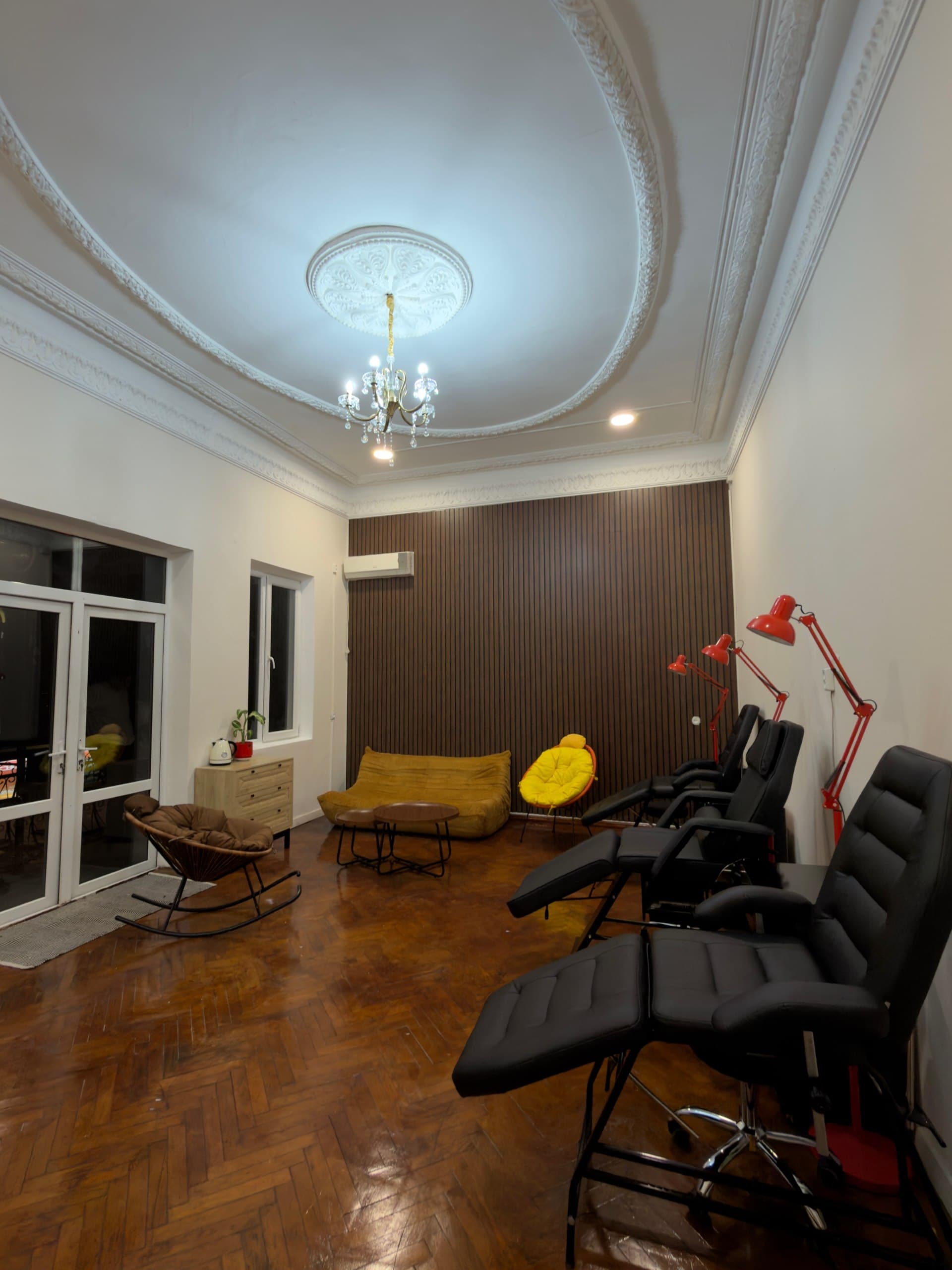
- 03Come to the studio at Petre Melikishvili Street 13, Batumi, for your session.